News
Contact UsMini Snap Card Holder Wholesale How Buyers Choose for Retail and Bulk Sales
-
 author
- 1 October 2026
Mini snap card holder wholesale sourcing works best when buyers match the holder to the actual card format, sleeve condition, sales channel, and pack configuration. A low-profile snap case can fill the space between a flexible sleeve and a thicker magnetic holder, but only when the cavity, closure, visibility, and unit pack suit the intended program. Before comparing quotes, decide what goes inside the holder and how the finished unit will be sold.
For importers, distributors, card shops, breakers, and private-label brands, the useful buying sequence is product fit first, sample approval second, and commercial packing third.
This avoids ordering a compact holder that looks right in photos but does not accommodate the selected card or sleeve, remain closed through normal handling, or move efficiently through retail and warehouse operations.
Where Mini Snap Holders Fit in a Product Assortment
A Mini Snap is a compact rigid holder for an individual trading or sports card. It belongs beside sleeves, toploaders, magnetic holders, and display accessories, but it should have a defined role rather than duplicate them.
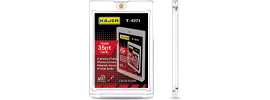
KEJEA’s Mini Snap card holder range includes a clear snap-style model and a recessed, colored-frame model, giving buyers two visibly different merchandising directions.
For a value-focused accessory line, a Mini Snap can provide a rigid presentation option without using the same format as a premium magnetic holder. It may be sold as a single accessory, a multipack, part of a starter protection kit, or an add-on beside raw-card storage products.
The right position depends on card fit, perceived value, display method, and the buyer’s target price architecture; it should not be selected solely because the case is compact.
Set a Clear SKU and Sales-Channel Role
Define who will buy each SKU and how store staff will explain it. A hobby shop may need a single clear holder near the checkout, while an online retailer may prefer a count-based multipack with dimensions visible in the listing. A distributor may need inner boxes that divide cleanly across customer orders.
Document the selling unit, channel, target card type, and companion products before asking the supplier to recommend a pack. This keeps the wholesale program focused and makes early quantity estimates easier to explain.
Start With the Card, Sleeve, and Cavity
Measure the object that will actually enter the holder. Record card width, height, and thickness, then confirm whether the program uses a bare card, a perfect-fit inner sleeve, or another sleeve format. The sleeve can change both the external size and the friction at the cavity edges.
If the product must cover several card categories, prepare a reference set instead of treating the words standard card as a complete specification.
Ask the supplier to identify the holder’s internal dimensions and the card condition used to establish fit. During sampling, look for edge contact, corner pressure, visible bowing, excessive movement, and blocked artwork. The card should enter and sit as intended without the buyer forcing the shell closed. A small difference in cavity geometry can determine whether one SKU works for the planned assortment.
Test the Snap Closure Under Normal Handling
A snap holder should be evaluated as an assembled product, not as two separate plastic pieces. Close each sample using the intended card or sleeve, then check alignment around the perimeter. Open and close it several times using a consistent method.
The review should record whether the tabs engage, whether any corner lifts, and whether reopening requires a reasonable action for the target customer.
Handling checks should reflect the sales channel. For retail multipacks, inspect shells after packing and unpacking. For breaker supplies, consider repeated opening at a worktable. For a display bundle, check how the case sits on the selected stand.
These are application checks, not universal performance claims. Buyers should agree on an observable acceptance method before approving bulk production.
Compare Clear and Framed Mini Snap Styles
A fully clear case keeps attention on the card and can simplify a neutral accessory line. A colored frame creates a stronger shelf identity and may coordinate with a team, store, or private-label color system. The framed option also changes the visible border and overall footprint.
Neither style is automatically better; the buyer should compare card visibility, color consistency, closure, stacking, display compatibility, and packed-carton efficiency.
Img.Clear Mini Snap card holders for wholesale trading card protection.webp
Material should be considered together with the complete construction. Sample evidence matters more than a broad claim that one plastic is always clearer, stronger, or more protective.
Ask for the declared material, then inspect the finished holder under consistent lighting for visible particles, marks, distortion, edge finish, and color variation. If a specific market requirement applies, define the required documentation instead of assuming material names establish compliance.
Use KEJEA Models as Practical Buying References
KEJEA’s T-1383 clear Mini Snap holder is a PS model with a listed 65 x 90 mm internal size, 69 x 95 mm outside size, and 6 mm overall thickness. Its published packing is 100 pieces per inner box and 1,000 pieces per carton.
These figures help a wholesale buyer assess card compatibility, shelf footprint, inner-pack handling, and carton planning before requesting samples.
The T-1363 recessed Mini Snap holder uses ABS and packs 800 pieces per carton. Its colored border and recessed presentation give retailers and private-label programs a different visual direction from the clear T-1383.
The two models belong in separate sample checks rather than being treated as interchangeable.
KEJEA lists OEM/ODM availability for these product pages, so branding, color, and packaging requests can be defined during the quotation process. Final feasibility and commercial terms remain project-specific.

Plan Retail Packs and Cartons Together
Choose the unit pack from the selling format. A single case may need a bag, label, insert, or retail box; a multipack needs a count that customers understand and warehouse teams can pick efficiently.
Confirm how the holder surfaces are separated, how units sit in the inner box, and whether the package prevents movement that could create visible marks. Then request packed dimensions and gross weight for freight and storage planning.
Private-label artwork should follow the approved physical pack structure. KEJEA’s custom packaging service can support a discussion about bags, boxes, labels, and related presentation needs.
Buyers should provide logo files they are authorized to use, barcode data, color references, required market language, and any applicable warning or importer information. Packaging approval should use its own revision number.
Approve Samples Before Comparing Final Cost
Create a short approval sheet for each candidate. Record the sample code, holder dimensions, material declaration, tested card and sleeve, closure result, visible surface condition, color reference, unit pack, and carton arrangement.
Photograph any rejected condition and describe where it occurs. A comment such as upper-left tab does not engage with the sleeved reference card is more useful than a general request for better quality.
Once the physical and packaging references are aligned, normalize quotations. Separate one-time artwork or development charges from recurring unit and pack costs. Confirm quantity assumptions, currency, trade term, quotation validity, and any excluded item.
The lowest piece price is not necessarily the best wholesale result if the offer uses a different pack count, requires repacking, or consumes more carton volume.
Send a Product-Focused Wholesale Inquiry
A useful inquiry names the preferred Mini Snap style, intended card and sleeve, estimated quantity, unit-pack concept, branding scope, destination market, and target sales channel. Attach dimensions, photos, artwork status, and reference samples where available. Ask the supplier to identify open assumptions so competing offers can be reviewed on the same basis.
Ready to source Mini Snap holders in bulk? Request a Mini Snap wholesale quote from KEJEA and include your product model or card size, quantity, packaging, and customization requirements.
Email: kejea@kejea.com | WhatsApp: +86 18938205020.
FAQs
Can a Mini Snap holder be used with a sleeved card?
It depends on the cavity and the exact sleeve. Provide the sleeved card as the reference object and approve fit, edge clearance, closure, and removal with a physical sample. Do not assume every inner sleeve works with every Mini Snap.
Should a wholesale buyer choose a clear or colored-frame model?
Choose from the sales task. A clear format emphasizes the card and a neutral line; a colored frame can strengthen shelf identity or brand coordination. Compare visibility, color consistency, overall footprint, display fit, and packing efficiency before approval.
What belongs on a Mini Snap sample approval sheet?
Record the sample and drawing revision, tested card or sleeve, dimensions, closure result, surface condition, color, unit pack, label or artwork version, inner quantity, carton quantity, and dated approval decision.
When should private-label packaging be finalized?
Finalize the holder and physical pack method first, then approve dielines and artwork. A change to dimensions, part orientation, protective separation, or pack count can require a new insert, box, label position, or carton plan.
Conclusion
A Mini Snap wholesale program should connect product fit with merchandising and logistics. Define the card and sleeve, compare clear and framed structures, test the closure, approve the pack, and put every quotation on the same commercial basis.
That process gives buyers a practical route from product selection to samples, branded packaging, carton planning, and a useful supplier inquiry.

Molecular
Versatile Industrial Feedstocks
Call Us
0769-88389789
High-performance
Guangdong KEPU Technology Co., Ltd.
Guangdong KEPU Technology Co., Ltd. is a source manufacturer specializing in trading card protection solutions, integrating R&D, tooling, production, and quality control in-house. With scalable manufacturing capacity, a mature quality control system, and OEM/ODM capabilities, we provide professional-grade, reliable product support for the global trading card collection and resale market.
- We’re professional
- We use quality material
- 100% customers satisfaction