24 February

Keji Stationery is Well-Prepared for the 135th Canton Fair!

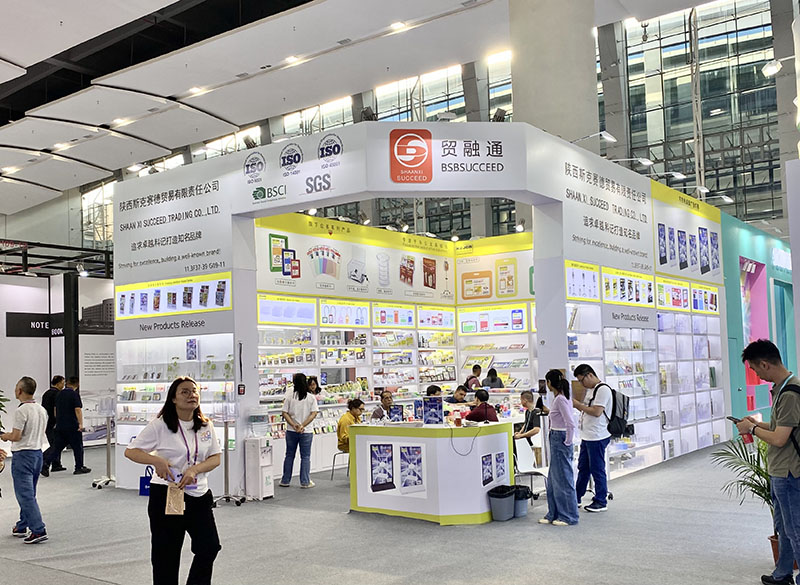
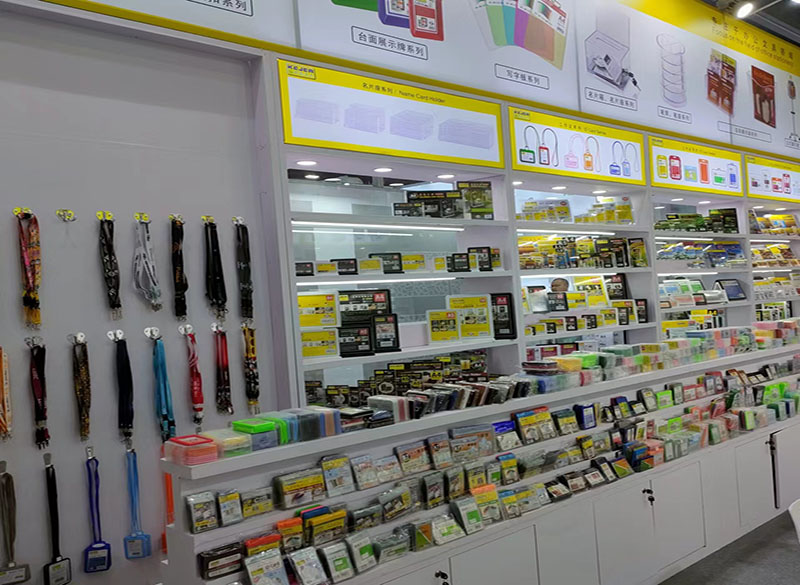
The third phase of the 135th Canton Fair will be held from May 1st to May 5th. This phase of the fair, themed “A Better Life,” will showcase 21 exhibition areas across five major sectors: toys and maternity products, fashion, home textiles, stationery, and health and leisure. A total of 11,495 companies will participate offline, including 262 import exhibitors from 29 countries and regions, contributing to improving people’s quality of life and enhancing their living experience. At this fair, Keji Stationery will display over a hundred self-developed products, including work badges, catalog display racks, table signs, ribbons, and its newly developed L-shaped illuminated advertising light boxes, attracting numerous buyers and customers seeking inquiries and cooperation. Meanwhile, Keji has deployed dozens of foreign trade sales representatives to provide customers with superior service, offering one-on-one dedicated communication and introductions. “Service First, Customer First” is our unwavering corporate tenet. We believe that everyone at the Canton Fair can feel the charm and sincerity of Keji Stationery, as well as our company’s emphasis on this Canton Fair and our customers. This also reflects the strong production capabilities and competitive advantages of a source manufacturer!
25 February

The 134th Canton Fair – Keji Stationery Leads a New Trend

The third phase of the 134th China Import and Export Fair (Canton Fair) was held in Guangzhou for five days. This phase covered a total exhibition area of ​​515,000 square meters, with over 24,000 booths and more than 11,000 exhibitors, including the prominent presence of Keji Stationery. A total of 229 countries and regions participated in the fair, both online and offline. Among them, 197,869 overseas buyers attended offline, a 53.4% ​​increase compared to the 133rd session and a 6.4% increase compared to the 126th session before the pandemic. 453,857 overseas buyers participated online, a 16.2% increase compared to the 133rd session. Overseas buyers gave high praise to this year’s Canton Fair, considering it a “treasure trove” platform where they could achieve one-stop sourcing, and highlighting the widespread popularity of Chinese-made goods in the global market. Among them, the most popular product at this exhibition was Keji’s “Rechargeable Illuminated Lightbox,” which was also Keji’s new best-selling product at the exhibition. The rechargeable and luminous signboard attracted many buyers to visit and purchase, leading a new trend in display stationery.
26 February

Protection and Value Within a Small Space: A Comprehensive Analysis of Rating Cards

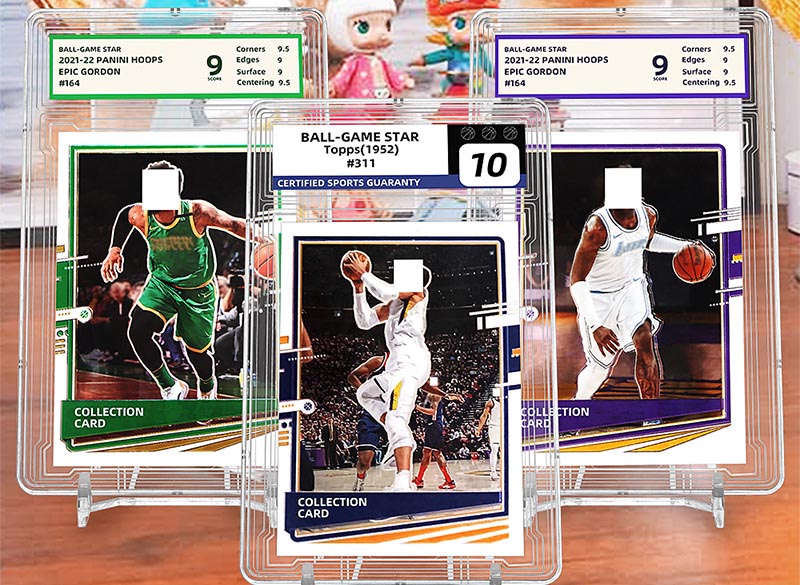
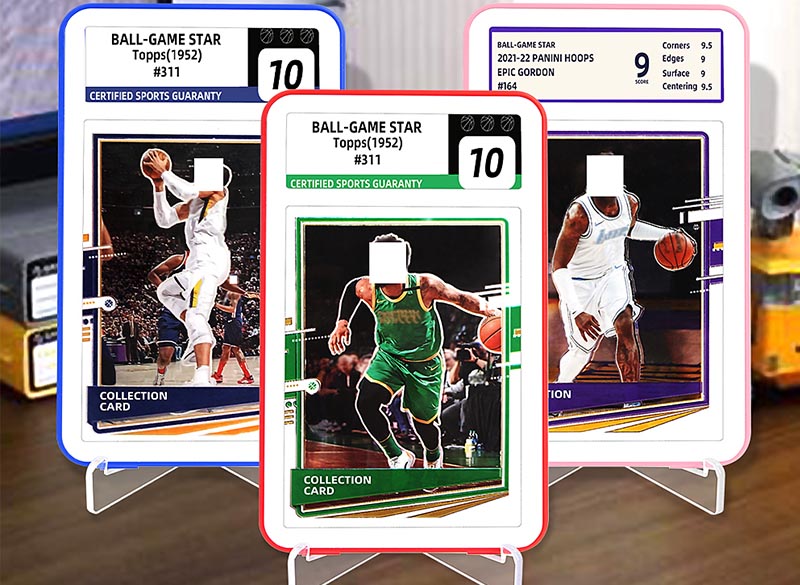
In the world of trading cards, the value of a rare foil card or an autographed sports card can far exceed our imagination. For collectors, properly preserving these “treasures” and ensuring their value is recognized is a crucial skill. In this process, graded card bricks play an indispensable role. They are not only the physical guardians of the cards but also the authentication marks of their identity and value. What are Graded Card Bricks? “Graded card bricks” is a common term in the collecting world for cards that have been authenticated, encapsulated, and graded by professional grading agencies. When a bare card is sent to grading agencies such as PSA, BGS, GC, and CCG, experts rigorously grade it from multiple dimensions, including edges, surface, and centering, before finally sealing it in a highly transparent, sturdy acrylic protective case. This hard shell, due to its crystal-clear appearance, sharp edges, and heavy, thick shape, resembles a “brick,” hence the name “card brick.” This process is more than just putting a protective case on the card; it actually completes three core actions: authentication, condition grading, and sealed preservation. Why are graded card bricks necessary? For card collectors, choosing graded card bricks is primarily based on the following deeper needs: 1: Authoritative authentication to distinguish genuine from fake: In the secondary market, especially for older or high-value cards, authenticity is the biggest pain point. Grading agencies use professional knowledge and technical means to authenticate cards, providing the most basic trust guarantee for transactions. A card with grading agency certification greatly reduces the concerns of both buyers and sellers during circulation. 2: Standardized grading to establish value: The score on a graded card brick directly quantifies the card’s condition. A PSA score of 10 or a BGS Black Gold Label score of 10 often means a significant increase in the card’s value. This standardized grading system gives cards a reference market pricing basis, similar to diamonds, making online and cross-border transactions more transparent and efficient. 3. Physical Sealing for Permanent Preservation: Card holders are typically made of high-hardness acrylic, effectively preventing cards from being squeezed, bent, or scratched. The sealed card holder also provides some protection against moisture, dust, and fingerprints. However, it’s important to note that while the card holder is sealed and moisture-proof, it doesn’t completely block light. Prolonged exposure to strong light, especially for valuable signed cards, can still cause the ink to fade. Therefore, using a light-blocking film or storing the card holder in a dark place is a necessary advanced protection measure. Grading Standards and Institutional Differences: Currently, there are numerous grading institutions on the market, with established international and emerging domestic institutions each having their own characteristics. Collectors often need to weigh the grading standards and the appearance of the casing when making a selection. Grading Dimensions: Mainstream grading standards primarily examine four dimensions of the card: Edges, Corners, Surface, and Centering. A comprehensive score is obtained by scoring each of these four aspects (usually accurate to 0.5 points). A perfect score of 10 is the ultimate goal, while 9 and 8 represent different levels of condition. International Institutions (PSA / BGS): 1. PSA cards are relatively thin and light, focusing more on the aesthetics of the card face. Their grading is highly recognized in the market and is considered a reliable and readily available currency. 2. BGS cards are thicker and offer better protection. They are favored by high-end collectors for their pioneering use of subdivided grading and visually striking “black and gold labels,” although some collectors occasionally complain about plastic fragments sometimes being inside. Domestic Institutions (Gongbo / CCG / JBH, etc.): 1. Gongbo cards have a substantial feel, high transparency, and are packaged as bare cards for easy visual appreciation. Their grading standards are relatively strict, and high-scoring cards (such as 9.5) are recognized by some collectors for their potential for appreciation in the market. 2. CCG has secured a certain market share due to its high cost-performance ratio and objective grading standards. Its graded cards typically have a protective film inside, but some collectors feel the casing is too wide, resulting in slightly less aesthetically pleasing layout. 3. Emerging institutions like JBH (Junior High School) are exploring personalized labeling, such as integrating label designs with card illustrations to increase interest. They have even launched double-layered graded cards for “CP” (Combined Card) cards, catering to collectors’ specific needs. Customization and Display Art With the flourishing of card collecting culture, graded cards have gradually evolved from simple protective tools into part of displayed art. On one hand, the concept of customized graded cards has emerged. For example, CCG has released large-sized graded cards with complete card designs, allowing for secondary creation of artwork that couldn’t be fully displayed due to card size limitations, greatly enhancing their visual appeal. While these large-sized cards are inconvenient to carry, they perfectly meet the needs of collectors focused on collection and visual enjoyment. On the other hand, collectors are becoming increasingly particular about the display of graded cards. To create a better display effect, multi-tiered wooden display stands and mounting frames with LED light strips have emerged. Soft lighting shines through the highly transparent card tiles, highlighting every detail of the card. Meanwhile, to further protect the card tiles from scratches, applying a special card tile film has become a common practice for many collectors. A Rational View of Grading While graded cards offer many advantages, experienced collectors also remind us to remain rational. For cards that you particularly cherish and don’t intend to trade, using high-quality magnetic card tiles (bare card tiles) provides excellent protection at a much lower cost than grading fees. Furthermore, for cards of low value, the cost of grading might even exceed the card’s intrinsic value, making it economically unfeasible. Ultimately, graded cards are tools for market transactions and the collection of rare items. They endow cards with financial attributes and a sense of timelessness beyond their design. Whether you’re an “investor” seeking maximum returns or a “card enthusiast” simply who loves anime and manga, when you put a card you’ve long desired into that square card set, what you’re holding is no longer just a thin piece of paper, but a heavy, frozen passion.

27 February

Shell Card Blocks: Creating a “Seashell” Home for Your Beloved Cards

In the world of card collecting, every rare card is a collector’s heart’s desire. From the shiny legendary Pokémon cards to the Blue-Eyes White Dragon from Yu-Gi-Oh!, and even miniature cards from idol groups, they carry not only value but also emotions and memories. How can these “treasures” receive the most comprehensive protection while still being readily accessible for appreciation? Shell card blocks, a name that has quietly gained popularity in the card collecting world in recent years, may be the perfect answer. Like a sturdy yet transparent “seashell,” it gently and securely encases your cards, combining protection and display in one. What are Shell Card Blocks? As the name suggests, a shell card block is a rigid card protection box resembling a seashell, capable of opening and closing. It is typically made of highly transparent plastic materials (such as PVC, PET, or PMMA acrylic) and closes using snaps, magnets, or zippers to securely store the cards inside. Unlike traditional cardboard tiles that require screws for fixing, the biggest feature of shell-shaped cardboard tiles is their ease of opening and closing. No tools are needed; it’s as easy as opening a seashell, hence the name. This design allows players to easily remove cards to enjoy or change the displayed content without worrying about damaging the tile or the cards. Three Main Types of Shell-Shaped Cardboard Tiles With the flourishing of cardboard culture, shell-shaped cardboard tiles have evolved into various forms to meet the needs of different players. 1. Flip-Top/Snap-on Shell-Shaped Cardboard Tiles This is the most classic type. It typically uses a high-strength snap-on design, opening and closing by pressing or flicking the snap. The advantage of this structure is that it is extremely secure when closed, effectively preventing cards from scattering due to accidental drops. At the same time, its material usually pursues high light transmittance, striving to achieve an “invisible” display effect, allowing the viewer’s attention to focus entirely on the cards themselves, restoring the most accurate colors. 2. Strong Magnetic Adhesion Shell-Shaped Cardboard Tiles This is an upgraded version that has gained popularity in recent years. It embeds strong magnets in the top and bottom covers of the tile, achieving opening and closing through magnetic attraction. This design completely eliminates the snap-on structure, resulting in a seamless surface and a more premium look. The magnetic force is carefully calibrated to securely hold the cards without damaging them or the graded card holders due to excessive magnetism. For collectors of graded cards (such as PSA and BGS graded cards), this type of card holder provides excellent “secondary protection” and a display stand. 3. DIY Handmade Epoxy Resin Seashell Card Holders This type transcends the realm of “protective tools” and enters the realm of “artwork.” Creators typically use UV epoxy resin to handcraft on a transparent card holder base, incorporating seashell fragments, glitter, dried flowers, marine elements, etc., to create unique Baroque-style or dreamlike themes. These seashell card holders are exquisite decorative items in themselves, suitable for encapsulating ordinary cards or photos, or used as standalone works of art for decoration or as gifts, possessing an inherent handmade warmth and artistic flair. Which cards is it suitable for protecting? Shell-shaped card holders have a wide range of applications, covering almost all types of collectible cards: 1. Graded Cards: For cards that have been submitted for grading and received high scores (such as PSA 10), collectors often use a special “mini shell sleeve” or a large shell-shaped card holder to prevent the grading shell itself from being scratched. This is double insurance for top-tier collections. 2. TCG Cards: Whether it’s Pokémon, Yu-Gi-Oh!, One Piece, or Magic: The Gathering, any rare foil or autographed card can find a safe home in a shell-shaped card holder. 3. Celebrity Photocards: For fans, their idol’s photocard is absolutely essential. Flat shell-shaped card holders effectively prevent photocards from being squeezed or bent, providing a more advanced protection solution than ordinary card sleeves. 4. Sports Cards: A signed Stephen Curry sports card deserves to be displayed in the best way. Transparent, high-transparency card holders perfectly showcase every detail and luster of the card. Purchase Guide: How to Choose a Good “Shell”? Faced with a dazzling array of products on the market, how can you choose a shell-shaped card that offers both protection and reliability? Consider the following aspects: 1. Material is fundamental: Prioritize materials with high light transmittance, acid-free properties, and UV resistance. Inferior PVC materials not only have poor transparency but may also yellow over time and even release acidic gases that corrode the card. PET or acrylic (PMMA) are superior choices. 2. Proper structural design is crucial:  Fit: The card slot size should precisely match the card. Too loose, and the card will wobble and wear; too tight, and the card edges may be damaged.  Edge treatment: Observe whether the edges of the card are smooth and free of burrs to avoid scratching your fingers or the card when handling it.  Closure method: For snap-on models, test the smoothness and tightness of the closure; for magnetic models, check if the magnetic force is sufficient and even. 3. Details Determine the Experience: Some high-end brands add scratch-resistant coatings to their products or use side-insertion designs to make card insertion smoother and prevent the card surface from being scratched by the card slot edges. For models with zippers, a smooth zipper also enhances the user experience. A Sense of Security in a Small Space In the world of collectors, the way they treat their items often reflects the degree of their appreciation. Shell-shaped card holders, with their shell-like shape, perfectly capture this sentiment—they are a hard protective shell and a soft display stand. When a card is gently placed into that crystal-clear “shell,” the moment it clicks shut, we gain not only physical dust and scratch protection, but also a sense of psychological fulfillment and security. Whether you’re a “numerical enthusiast” seeking ultimate protection, a “beauty-conscious” person who values ​​aesthetics, or a “craftsman” who loves creating things by hand, you can find your own unique way of protecting your passion among the various shapes and sizes of shell-shaped card holders.
back top
Products
Contacts
WhatsApp
Email